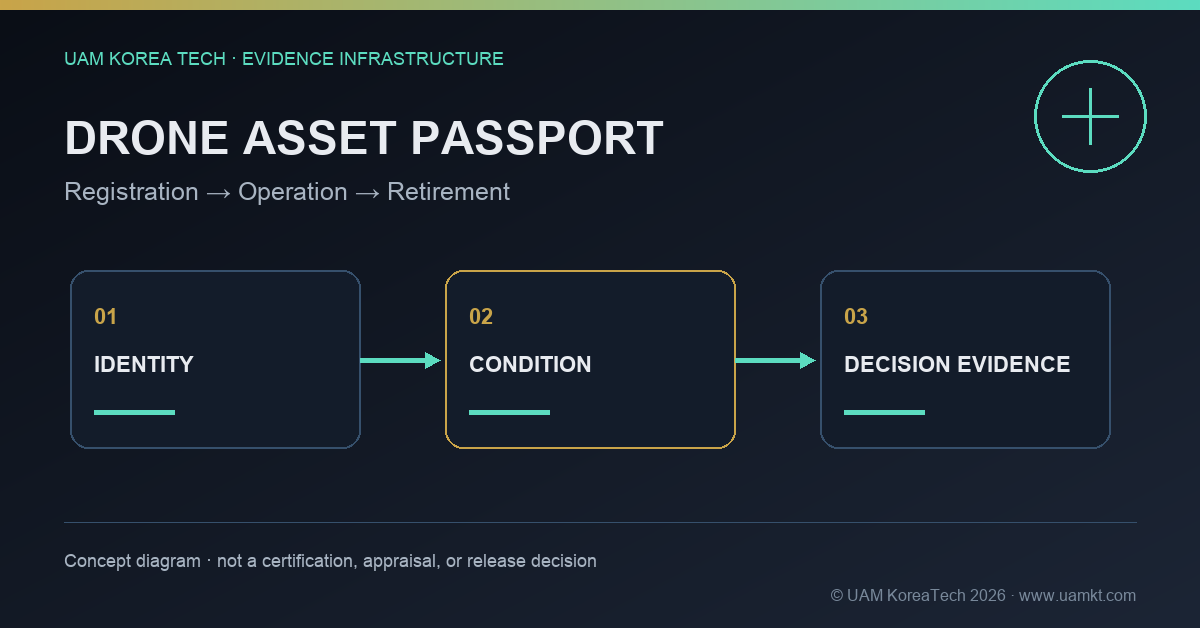
“Drone consulting” is too broad to buy well. It can refer to aircraft selection, operating approval, mission design, procurement, flight software, test planning, maintenance, or data workflow. When the engagement begins with a generic promise to advise, the client and advisor may reach the final meeting with different definitions of completion.
This Business Model note describes a proposed scope-first engagement pattern. It is not a claim about completed client work, a guarantee of regulatory approval, or a substitute for licensed legal, safety, certification, or engineering authority. The model is designed to make a potential engagement inspectable before either party commits resources.
The regulatory boundary must be refreshed for the actual jurisdiction and date. In the United States, begin with the FAA's official UAS resources rather than a consultant's summary; other jurisdictions require their own current authority sources. The engagement structure below organizes decision evidence but does not interpret or replace those rules.
Define the decision product
The first output should be a decision statement, not a slide deck. Examples include:
- whether a defined mission is ready for a controlled pilot;
- which requirements must appear in an RFP;
- which evidence is required before equipment acceptance;
- whether a current operating concept should proceed, proceed with conditions, or stop.
The statement should name the decision owner, users, jurisdiction, operating boundary, deadline, and the artifact that will record the outcome.
A four-stage engagement
Stage 1 — Boundary and evidence intake
The advisor and client record the mission, site, intended users, aircraft and payload assumptions, software baseline, authority interfaces, available records, and known exclusions. The deliverable is an intake register that distinguishes verified records, client statements, working assumptions, and missing evidence.
Stage 2 — Traceability map
The working team links each decision question to the evidence needed to answer it. A map may connect mission needs to requirements, test methods, acceptance thresholds, logs, configuration records, and responsible owners. Gaps stay visible rather than being converted into optimistic prose.
Stage 3 — Option and release workshop
The team compares options using the same criteria. Each option should show its operating benefit, evidence burden, dependencies, failure conditions, and unresolved authority questions. The workshop produces a draft disposition: proceed, conditional proceed, hold, or stop.
Stage 4 — Closeout pack
The final pack records the decision, rationale, counter-case, required actions, owners, dates, source register, and reopen triggers. It should also identify what the engagement did not verify.
| Deliverable | Acceptance check | Common failure |
|---|---|---|
| Decision statement | One owner and one bounded decision | Broad “strategy” objective |
| Boundary register | Assumptions and exclusions are explicit | Silent jurisdiction or site assumptions |
| Evidence map | Claims link to retained records | Sources listed without claim mapping |
| Options table | Same criteria across options | Unequal baselines or hidden constraints |
| Release record | Owners, dates, artifacts, reopen trigger | Recommendation without control path |
Commercial boundaries
A scope-first proposal should price the decision work, not imply an unlimited path to implementation. It should state the number of workshops, document volume assumptions, interview access, review rounds, turnaround dependencies, and change-control method. Third-party testing, certification, regulator decisions, aircraft modification, flight operations, and legal opinions should be separate unless explicitly contracted and lawfully authorized.
The client should also retain responsibility for the accuracy and lawful disclosure of the records it supplies. The advisor should identify evidence quality and contradictions, but should not silently certify source records that were not independently verified.
A buyer's release gate
Before appointing an advisor, ask the candidate to produce a sample decision statement and evidence-map skeleton using only non-sensitive information. The sample should show how uncertainty, contrary evidence, and out-of-scope items will appear. If the method produces only a generic presentation, the engagement is not yet decision-grade.
For procurement-specific controls, see From Drone RFP Requirements to Acceptance Evidence. For acceptance records, see Drone Acceptance Test Evidence Matrix. These links explain the public method; a real engagement would still require a signed scope and current jurisdiction-specific review.
The commercial promise should remain modest and testable: convert a bounded operational question and supplied evidence into a reviewable decision record. Anything broader should be split into a new phase.